

Slide for Ad's Sake
Slide like Isamu Noguchi

I’m reading a really great book at the moment called Art and Revolution by John Berger. It’s all about a Soviet-era artist called Ernst Neizvestny.
I’ve found myself stopping to pause every few pages or so because the world that is being described in post-Stalinist USSR is so eerily similar to the one that we are living in now, that I find myself utterly jarred and also eerily inspired.
This is not an essay about how we are living in a global dictatorship of banal buerocracy that’s totally Orwellian, or Kafka-esque or like Black Mirror etc.
But there was one take from Neizvestny that I was particularly taken with:
“Sculpture is essentially an art for crowds…Because the whole bias of our culture is towards the fragmentary and private, we tend to underestimate the civic, social nature of sculpture.”
Doesn’t that just smack you in the face?
In the century of the self, in the age of aggressive algorithic personalisation what is our shared goal in culture?
Le Corbusier said that once you find the true acoustic centre of a place, the point at which all sounds within the given space can best be heard, that’s where a sculpture should be placed.
Where are the acoustic centres now?
The dream of Trump’s Arc and the reality of Banksy’s flag of blindness monument are attempts from two poles of the spectrum at unity. But both will fail and have failed in fulfilling the civic and social good that a public sculpture should.
One is smug in its ‘vague’ political agenda with a bit of cheeky melancolic British humour thrown in for good measure. The other is typically obscene.
***
I am currently finding Isamu Noguchi’s 1986 Venice Biennale exhibition “What is sculture?” to be an excellent void-filler, and perhaps a monument to what could be possible if we created with the communal in mind.
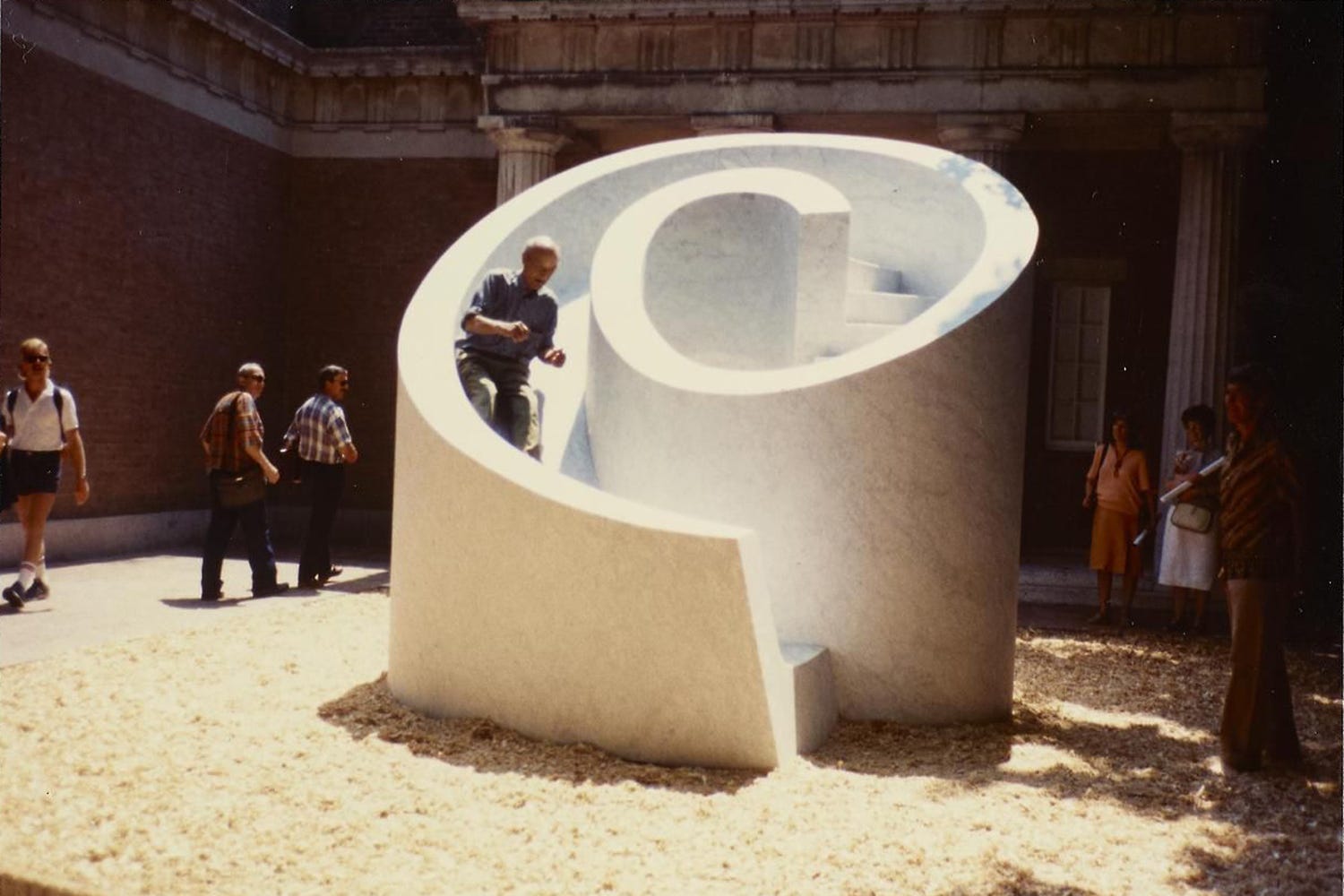
In particular the centrepiece: Slide Mantra.
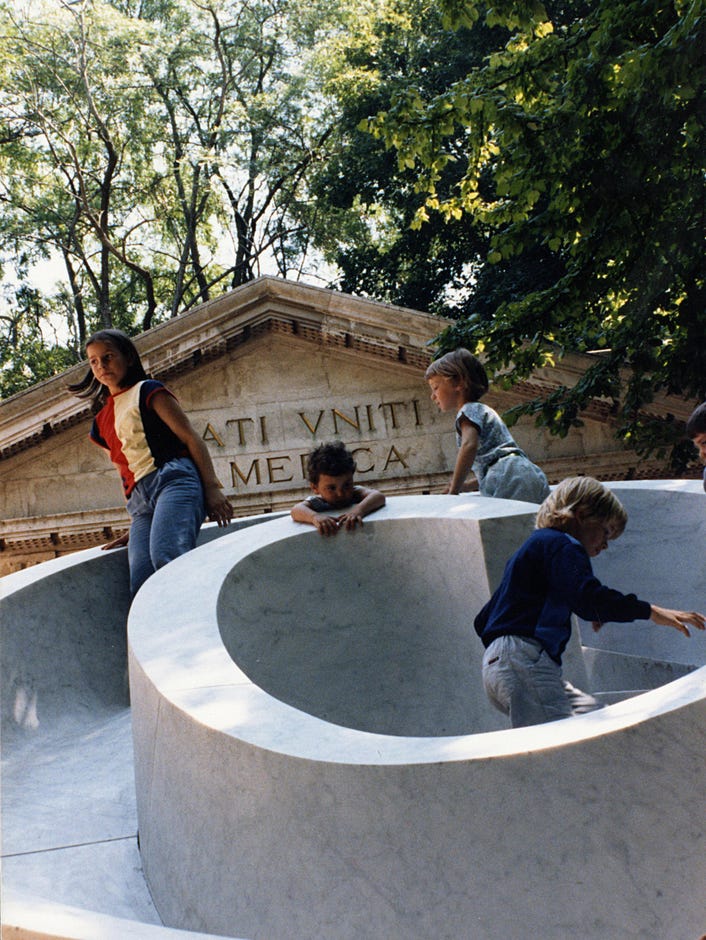
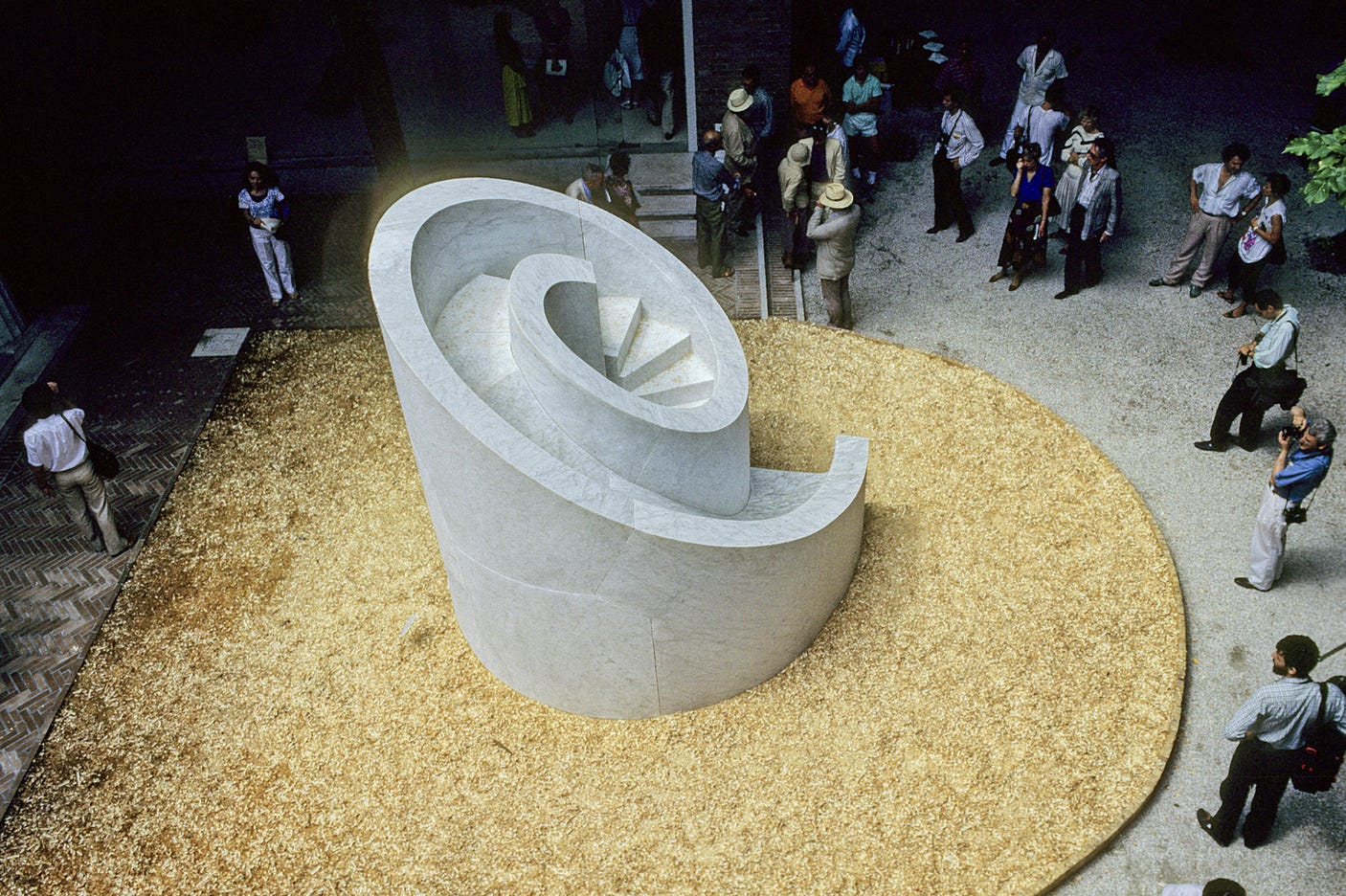
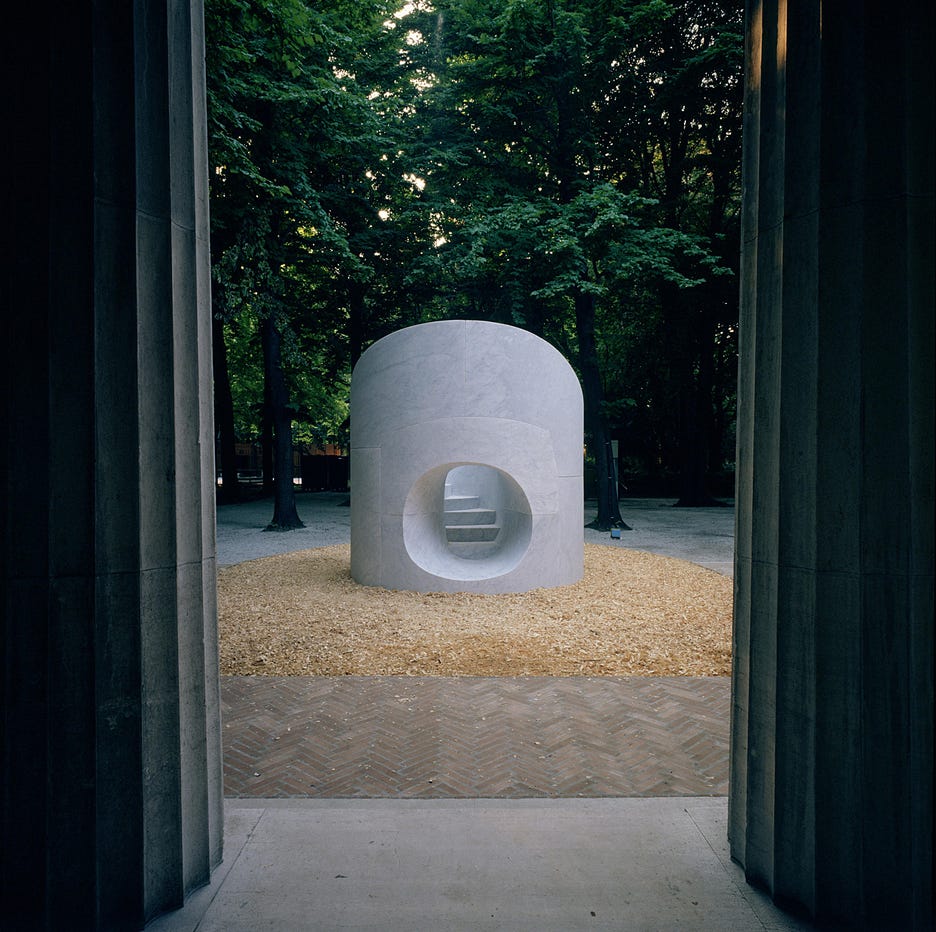
It’s a marble slide. It’s fun! It’s also a thing of beauty and inarguably a sculpture.
Originally concieved in the 1960s, Slide Mantra was eventually constructed from 120 tons of raw marble carved into eight pieces.
It has the elegant gravitas of a monument but the spatial awarness and generosity of spirit to become something more interactive. This opportunity to activate tacticle and sensory interactions with his art and design was something he would explore again and again.
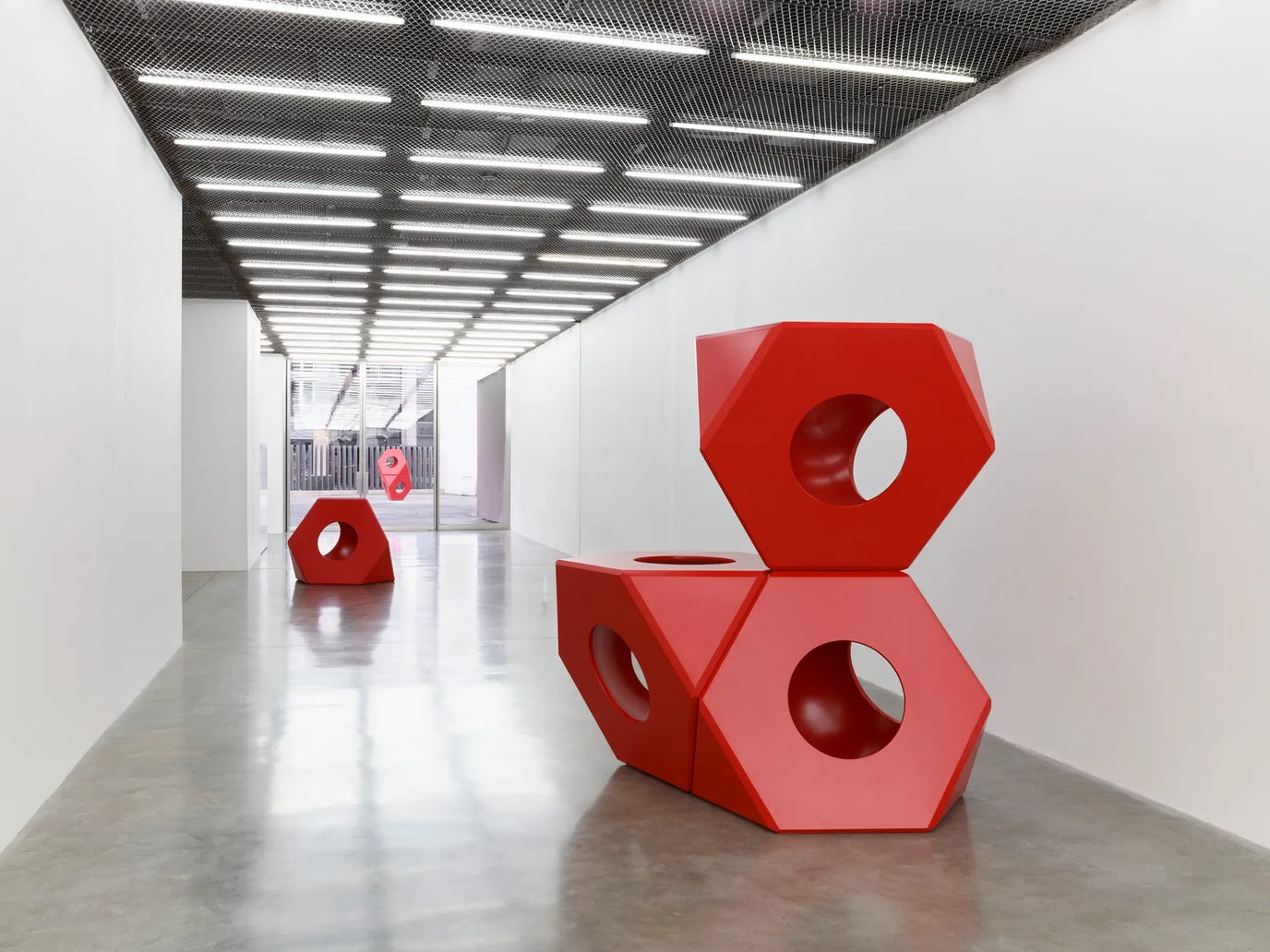
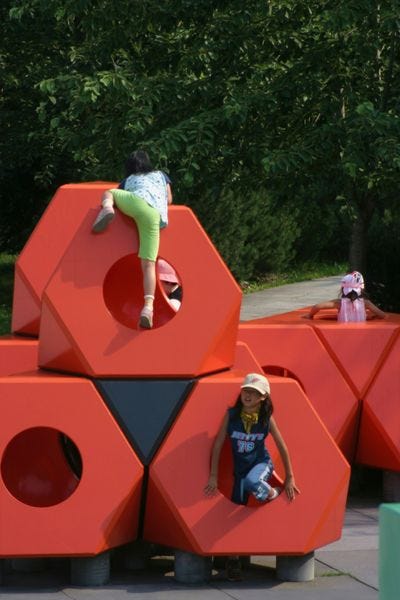
The modular ‘Octetra’ series, each unit a pyramid composed of five hollowed-out tetrahedrons. In the White Cube Gallery, and in Moerenuma Park, Japan.
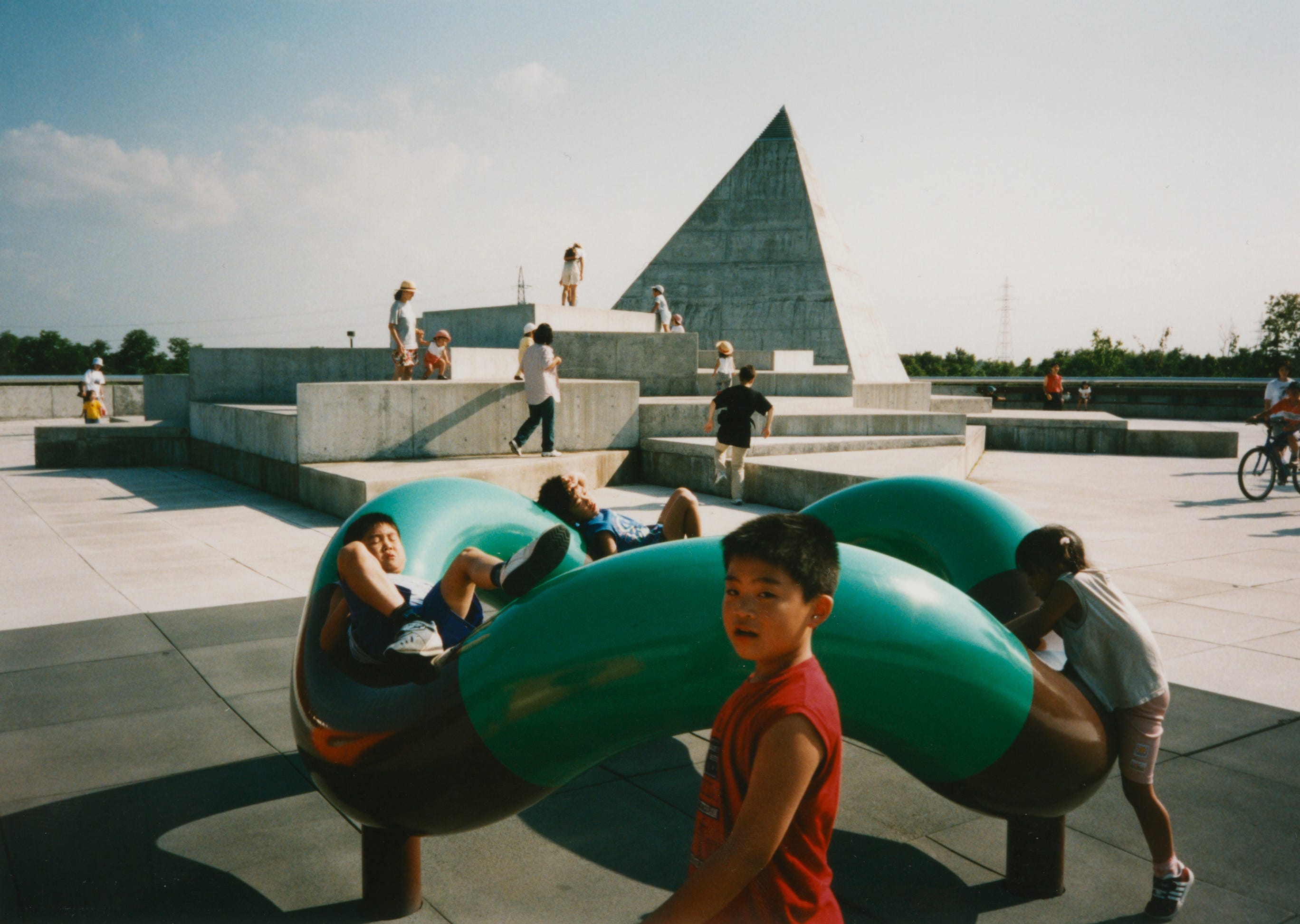
The UNESCO Gardens in Paris
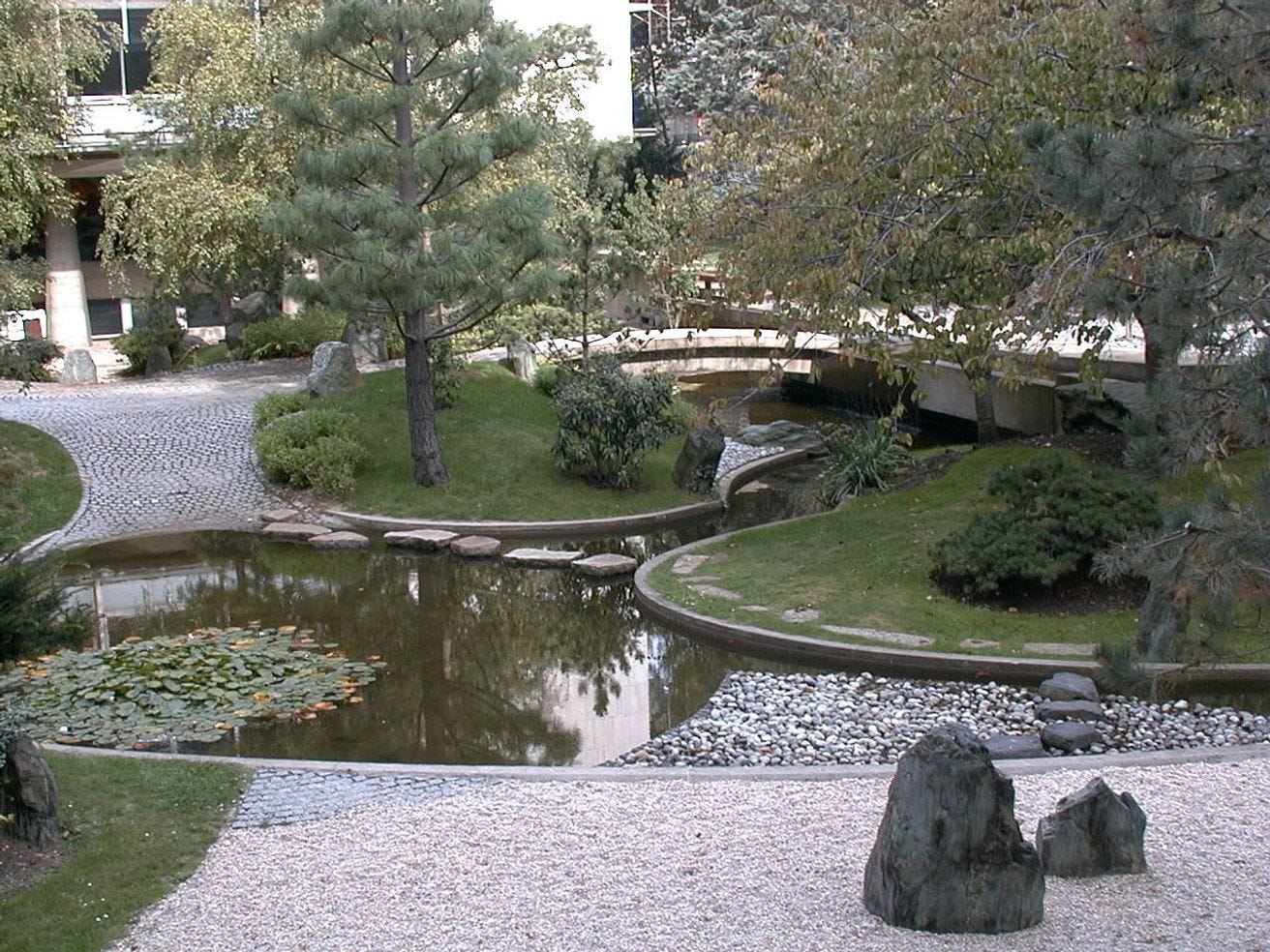
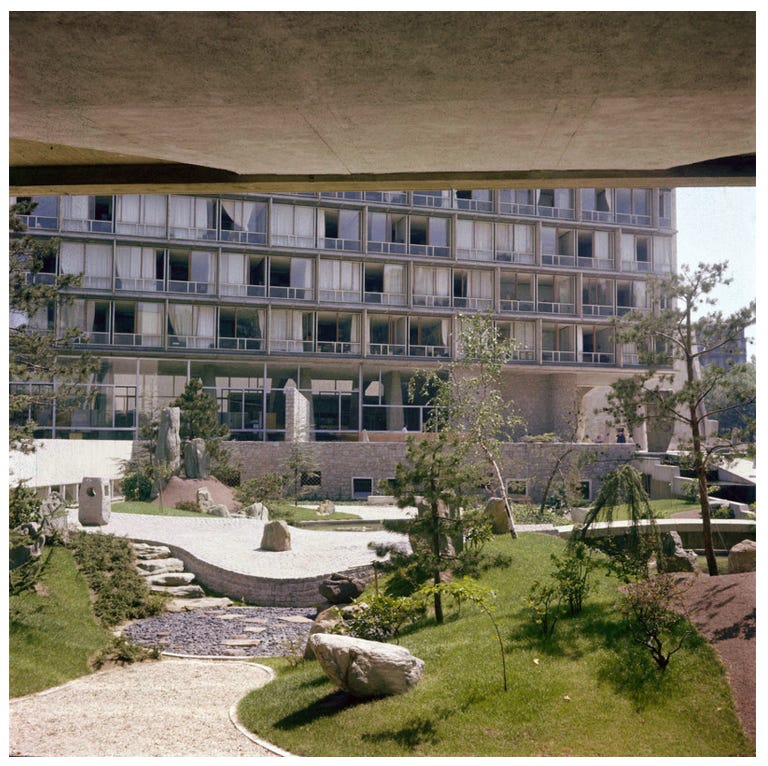
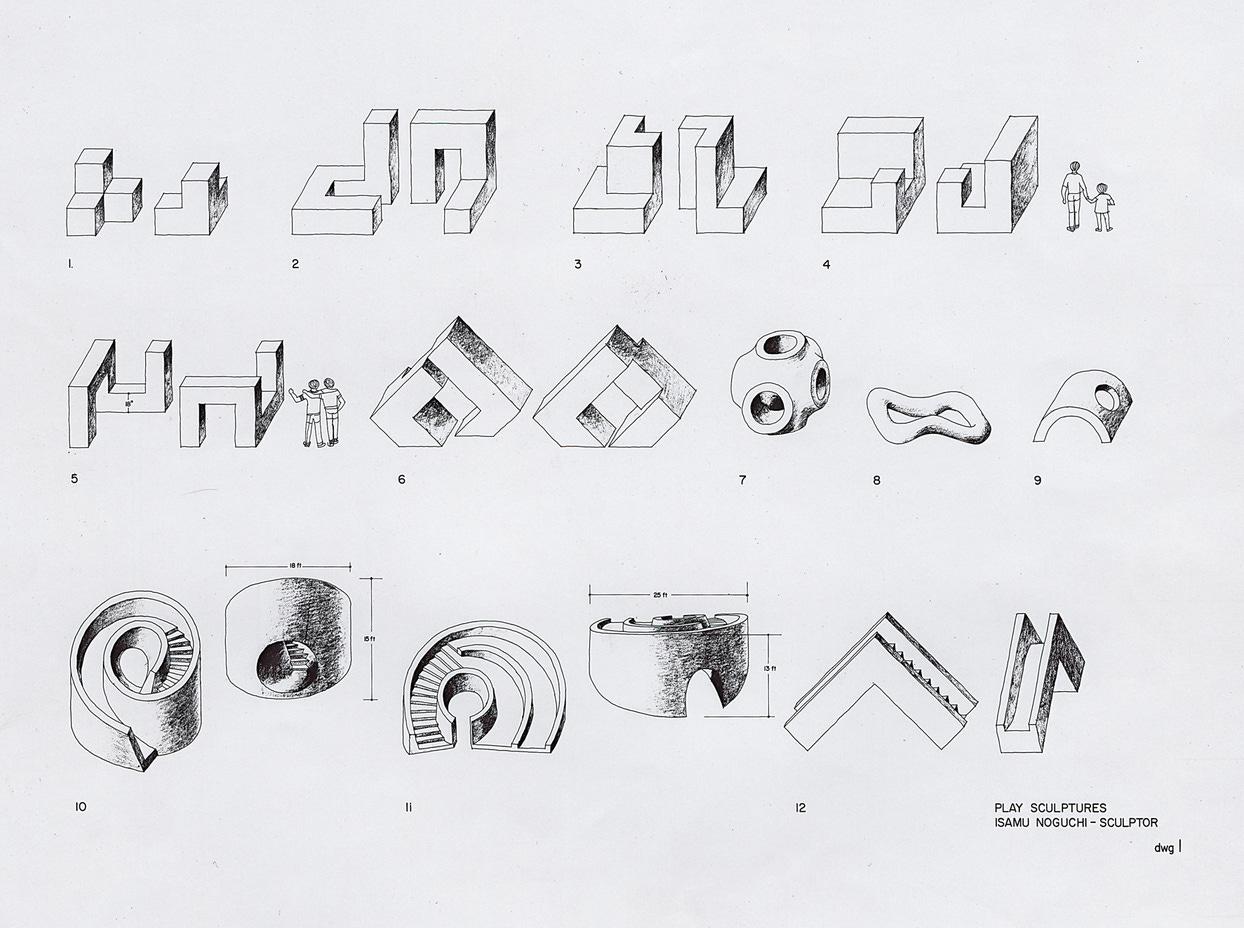
Perhaps the most audacious was Play Mountain, conceived in 1933. I’ll let Noguchi’s statement speak for itself:
“I wished to bring my vision of a pyramid in Idaho into the experience of people in the city where I lived. Play Mountain was conceived as a way of building on a city block in New York a mountain, which would, in fact, be an enhanced area for children’s play.
There were steps of all sizes, a slide with water in the summer, a longer one for sledding in winter. These sloping surfaces could also serve as a roof. In 1934 a model of this was shown to Parks Commissioner Robert Moses, which only gained his perpetual antagonism.
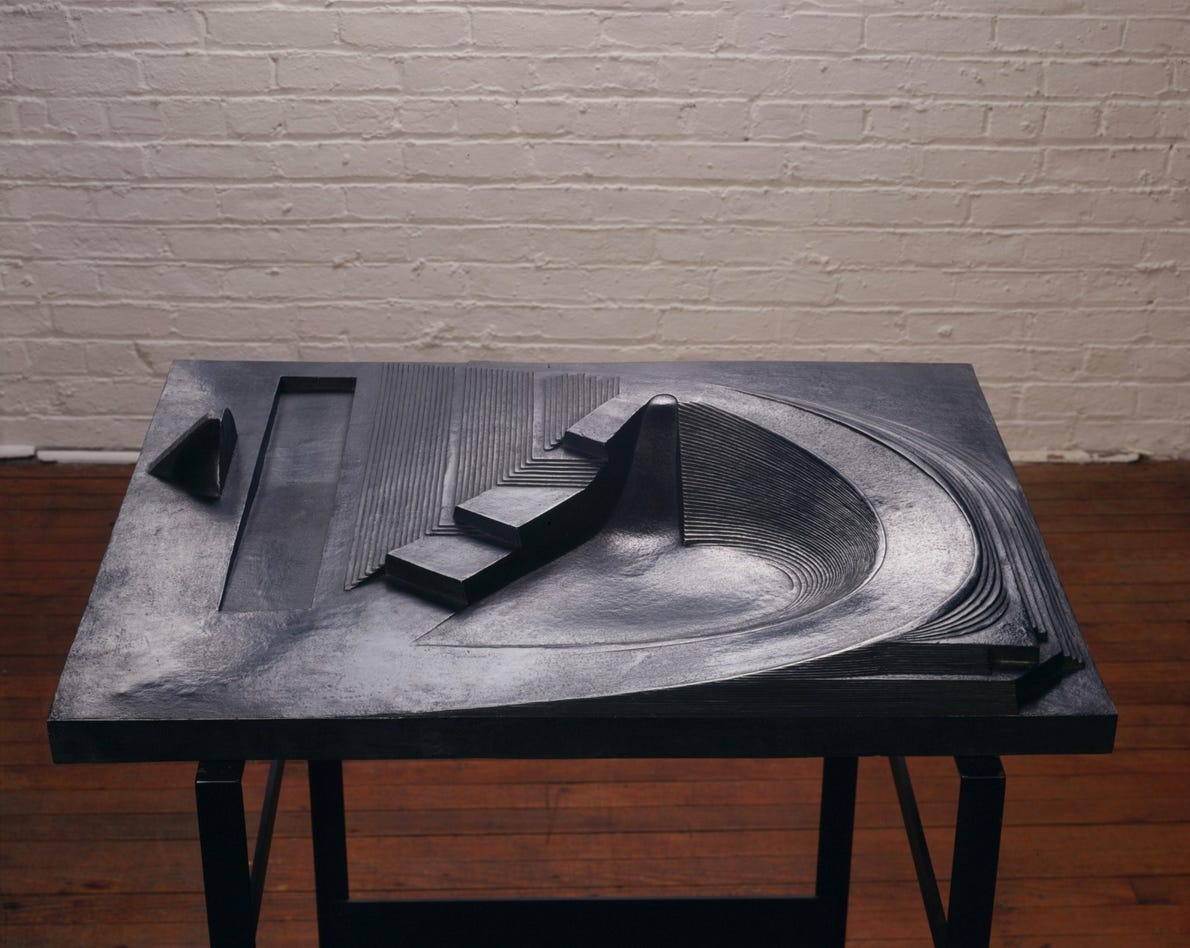
The work is inclusive, communal and social.
But importantly, it responds to the space.
One more quote from Noguchi:
‘The nature of trees and grass is one thing, but there are many degrees of nature. Concrete can be nature. Interstellar spaces are also nature. There is human nature. In the city, you have to have a new nature. Maybe you have to create that nature.’
What is audience?
Are you aware of the ball-pit-ification of art galleries?
Brad Troemel talks about it in expert detail. He charts the evolution of the gallery space into adult day care centres with their tactile, colourful, interactive events.
They are for influencers. They are activations. They are an economic response to a generation that has been conditioned to fear art, and has thus retreated into a safe space of childlike ignorance. This has ultimately resulted in a kind of perversion of the sort of art that Noguchi was making.
However, the crowd is not stupid. It is merely responding to what’s in front of it.
The art world has to be accountable for decades of inpenetrable artspeak and obscene wealth stockpiling – it’s no wonder alienation has set in. The advertising and marketing world too must reckon with its own mis-handling of the audience.
Mainly that they are regularly thought of and treated like utter imbeciles.
In commercial creativity brand activations make sense – getting people hands on with the product, manufacturing joyful or unique experiences under the banner of Brand X perhaps in collaboration with Brand Y.
These are sculptures in a way; monuments to the brands they represent.
How they respond to the space, how they enhance their acoustic centre, and how they enable us to act in a way that feels naturally and communally joyful should define their success.
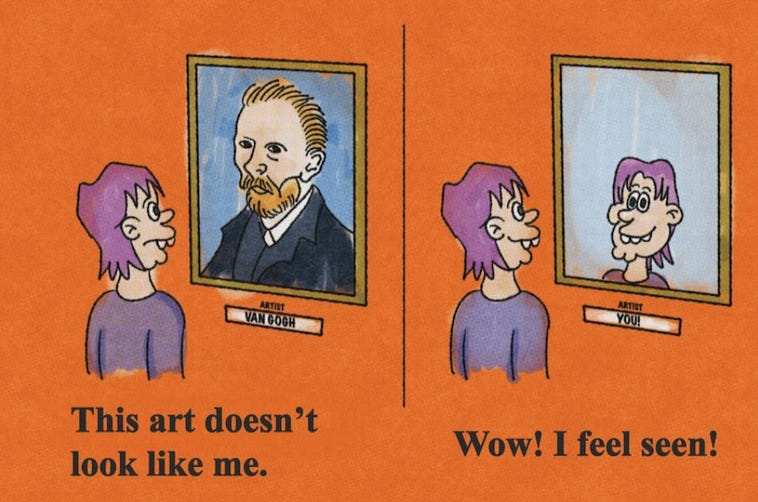
Monuments shouldn’t have to be mirrors.
Thanks for reading!
Like, comment and subscribe etc.
Jonathan ✌️

Noticed Board
Chipmunks at 16rpm
Woset World
RIP Tony Stella
More Noguchi
Drunk Jonathan Frakes